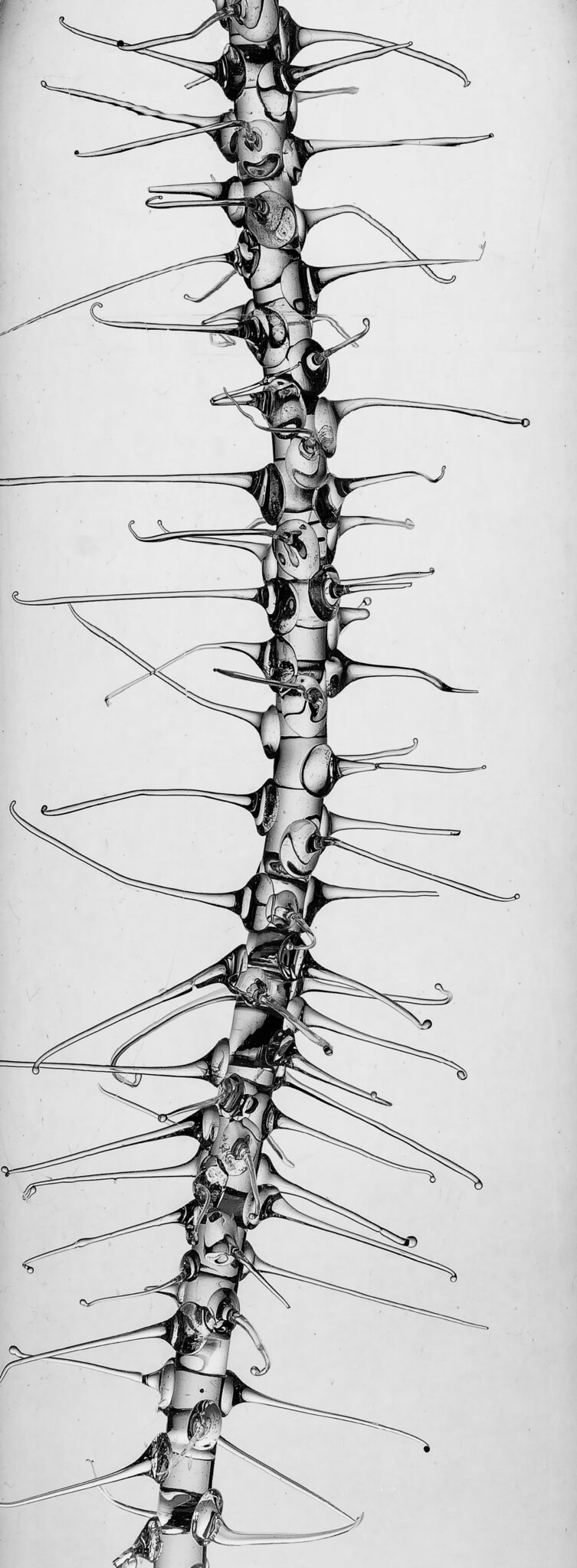
Coroa de Cristo

Coroa de Cristo

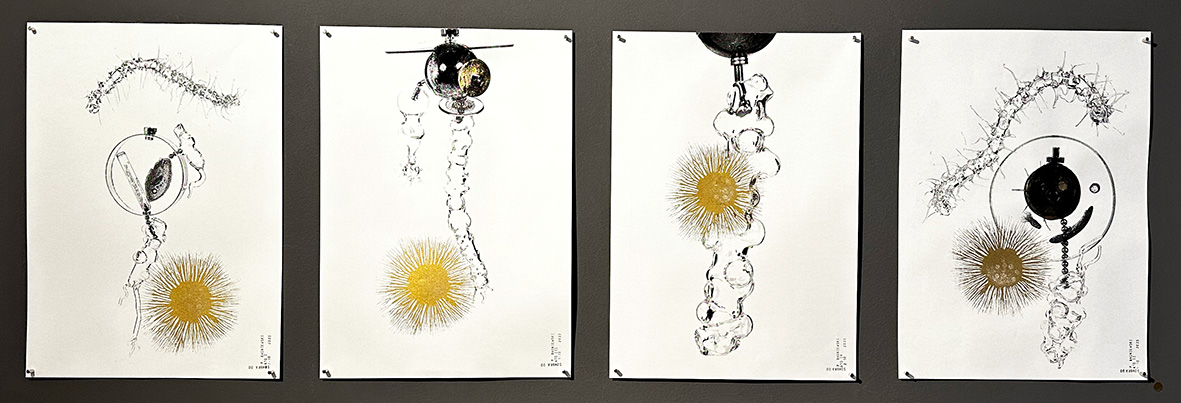
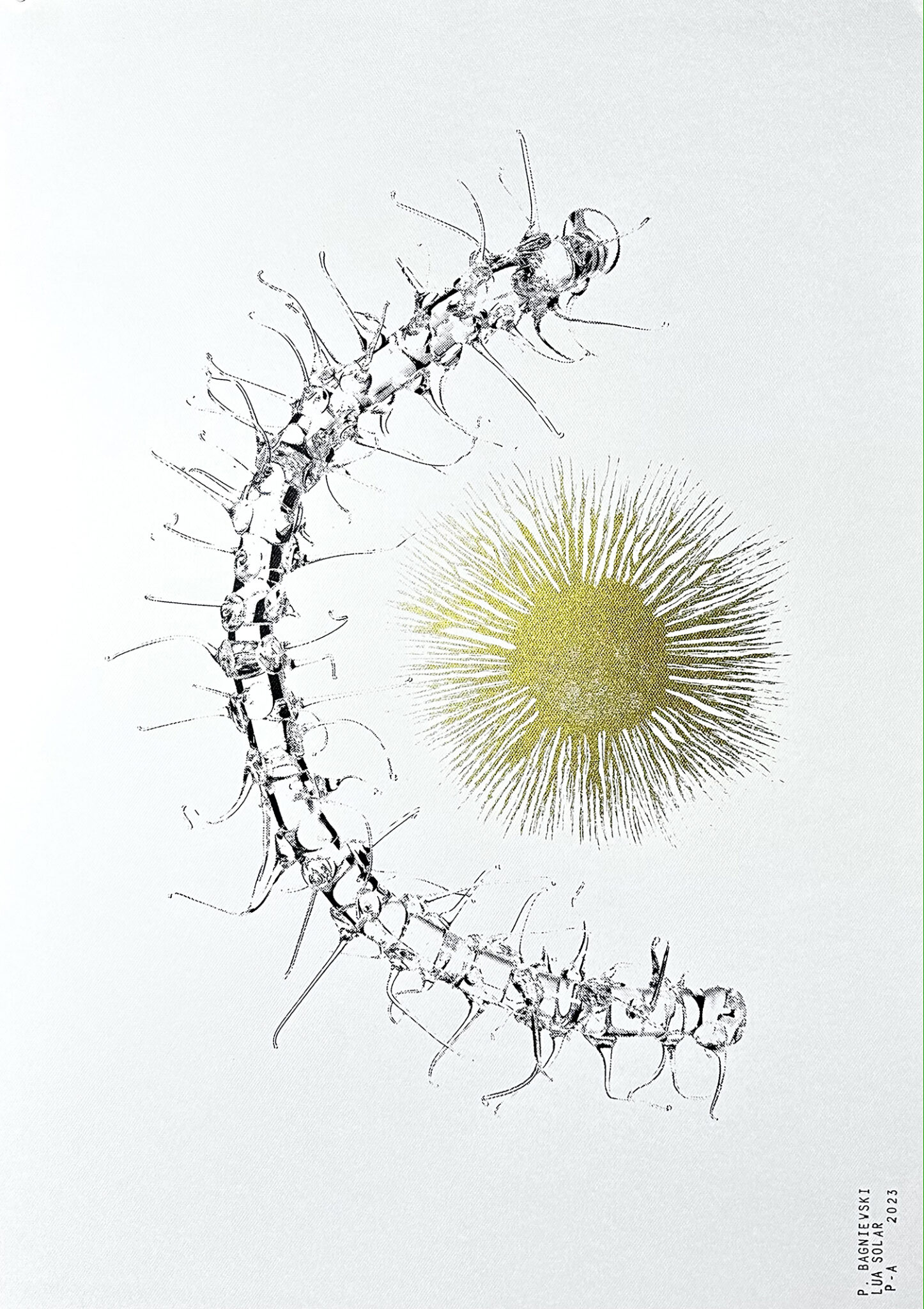
                                                                        “Coroa de Cristo”, serigafia em papel japonês, 2023.

&copy Fuzja Studio - 2017
 

What is below is like what is above, what is above is like what is below

What is below is like what is above
what is above is like what is below

This is an exhibition that results from research into the poetic possibilities of this mysterious material that is glass. A matter that hides in its almost invisibility…, but is palpable. Made from the transformation of silica (sand, volcanic lava...) by heat and rapid cooling. Transparency, hardness, impermeability and… fragility. Its discovery dates back thousands of years and emulates the alchemical practice of material transfiguration.

Patrícia Bagniewski chose glass as the support and material for her artistic research. She sought to learn the magic of transformation (in London, Japan or on the glass island, Murano, in Venice, where she visited several times). She searched for its history and its symbolism. She sought science and its surprising findings, such as the discovery of diatoms, organisms that are half organic (unicellular algae), half inorganic (crystals), or the microscopic structure of sand (a material that is linked to the version of the discovery of glass). She turned to the analytical psychology of Carl Gustav Jung and the history of alchemy, where she met the philosopher Hermes Trismegistus, whose second hermetic law, that of correspondence, gives the exhibition its name...

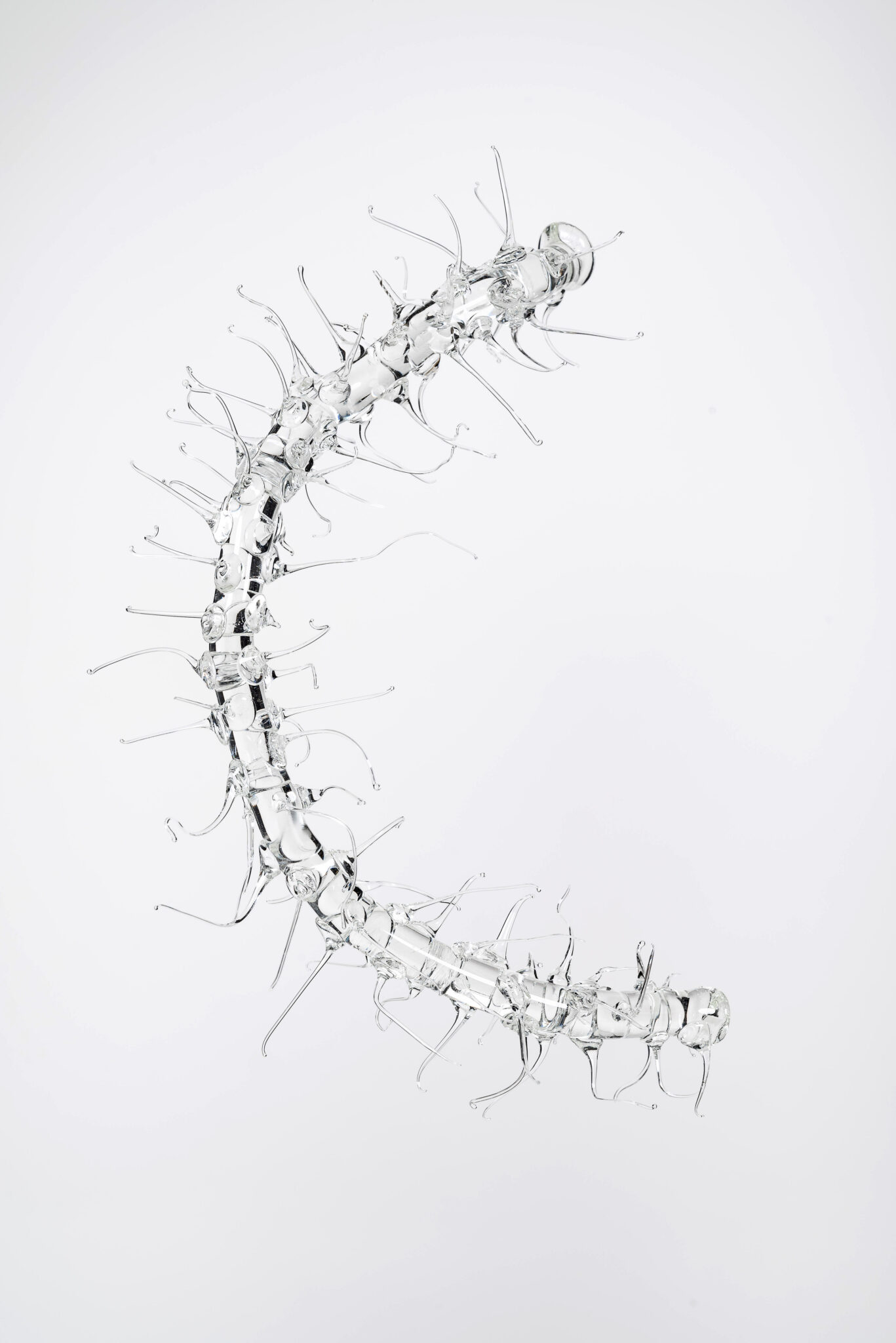
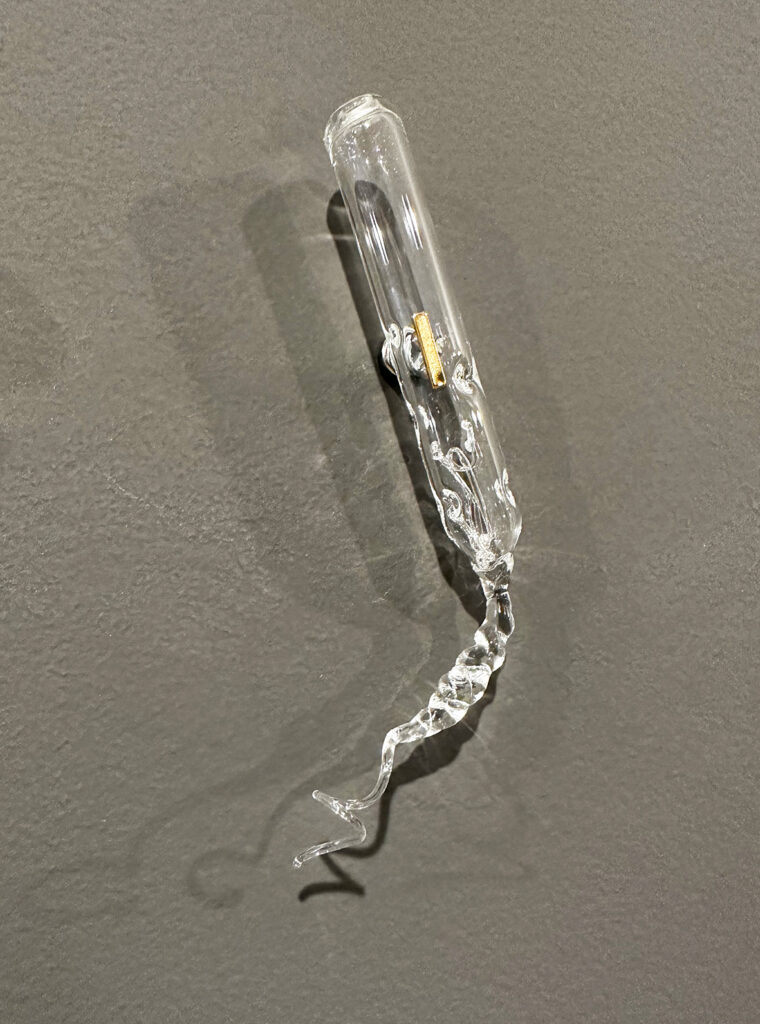
From glass, from its transparency, Patrícia made a series of unusual banal objects that, in a subversion, began to occupy velvet cushions, unlikely jewels. She also created beautiful landscapes. She did experiments. Among the ‘objects’ appeared the crown of Christ in transparent glass, reproducing part of the stem of that common bush, with small red flowers, used as a hedge. And with it comes the unavoidable reference to our religiosity through Christianity.

 The common object, in the artist's approach, triggers thought about the symbology hidden in popular naming... and from there emerges the set of works we see now.

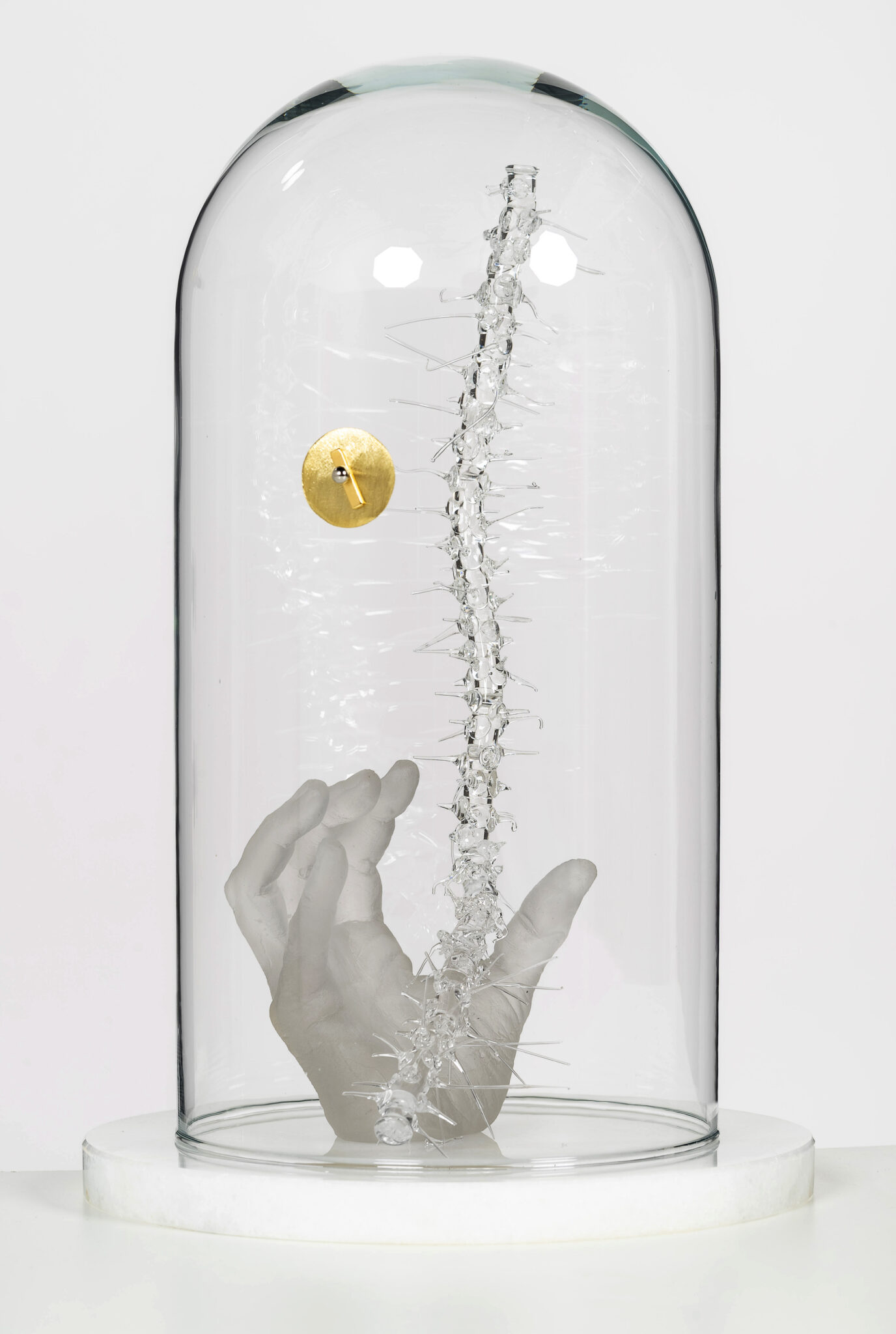
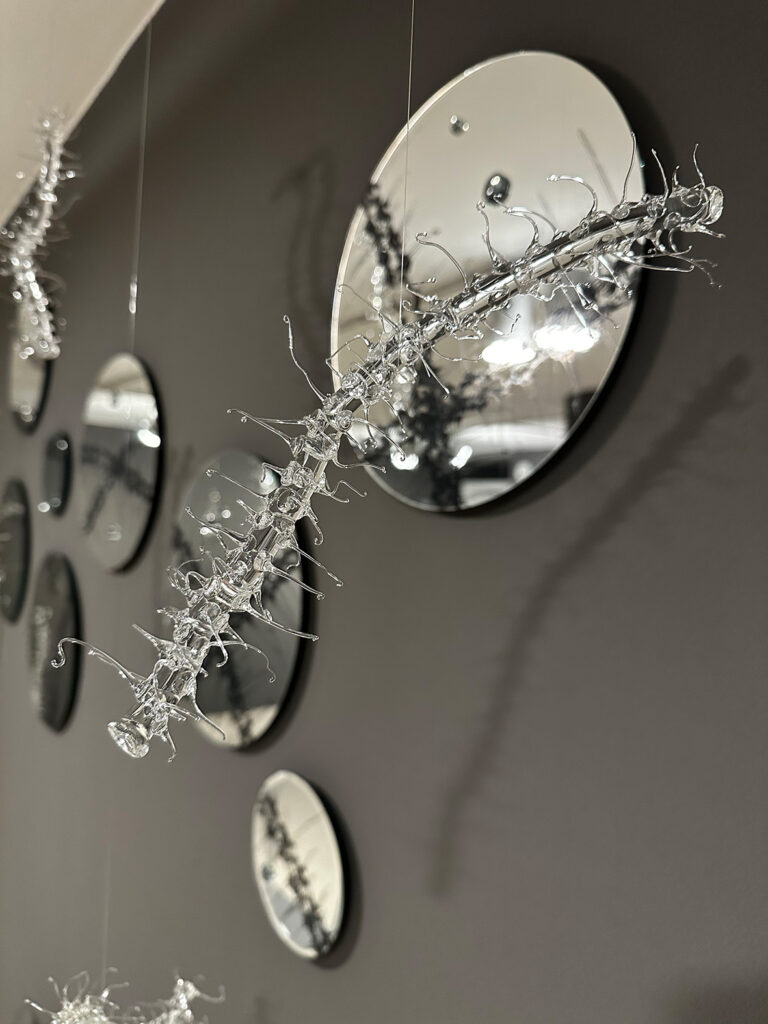
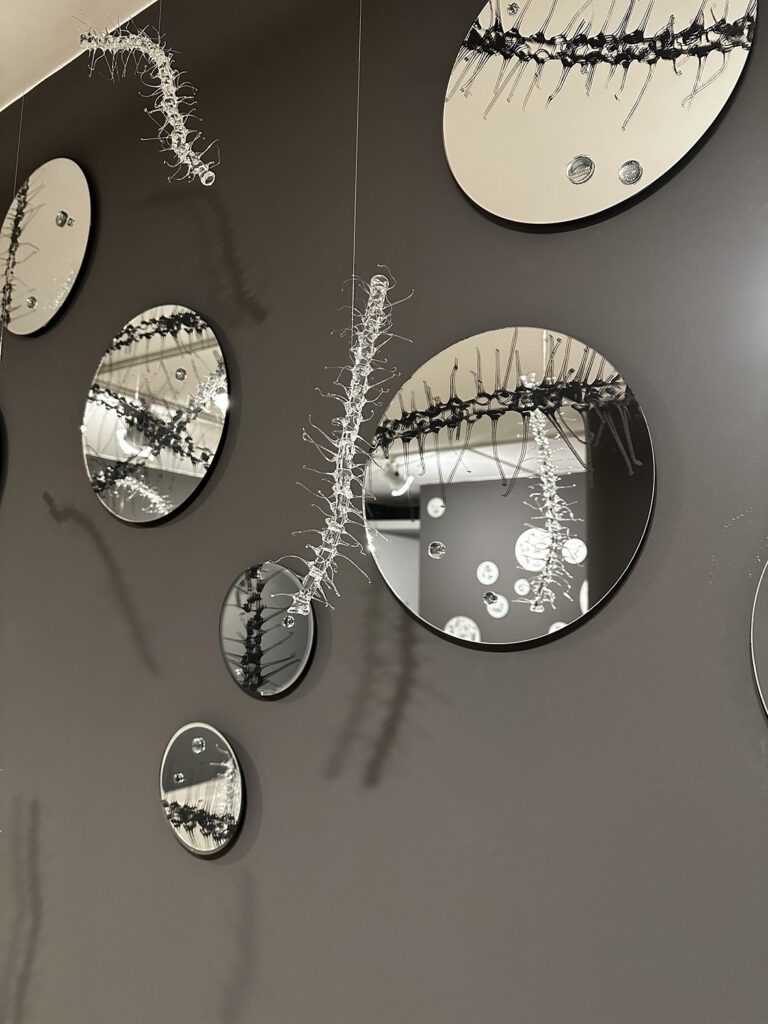
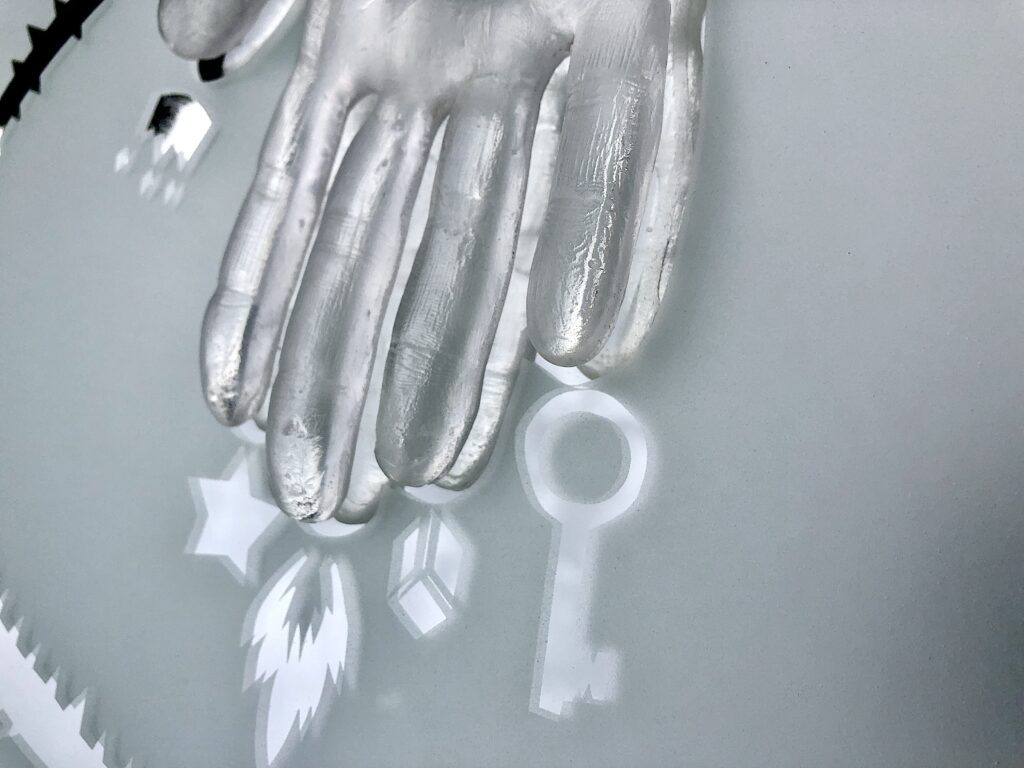
The Installation Sublimation/Coagulation, where the glass hand (which was modeled on the artist's own) addresses the circularity of the metal and the translucency of the plant, representing at the same time a composite object and an action. The elements are found inside a dome, separated from the world. Starting from this object, spreads the series of circular mirrors that have engraved, on their surface, the shadows produced by the small thorny stems, all placed on the wall. By reflection, we are captured into the work. In front of you, suspended, are some glass pieces of the crown of Christ that are repeated reflected in the mirrors and project their shadow over the whole. The repetition of the symbolic piece functions as a punctuation of the work's narrative. Establish a rhythm for your reading.

 The mirrors receive a version of Primordial Soup (around creation through the lens of science), conceived by Patrícia, associated here, by proximity and mirroring, with the Christian symbol (paradoxically).

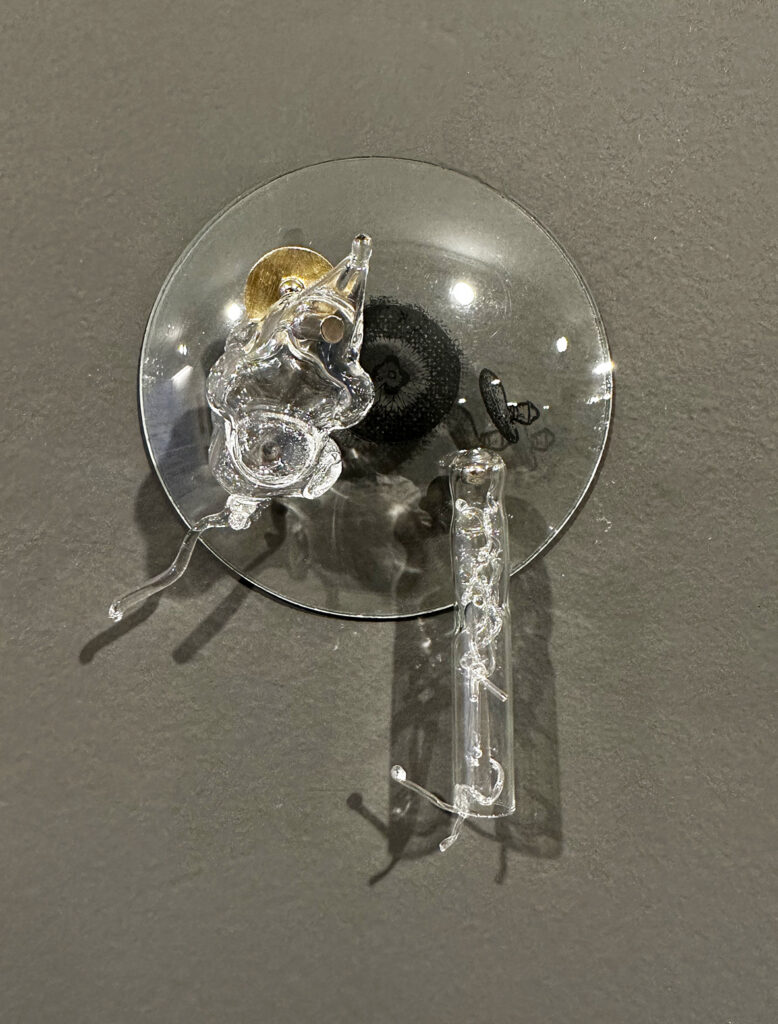
The 30 Petris exposed have, as a base, the homonymous plates, so common in the laboratory as transparent bases that receive the material to be revealed by the microscope. Compositions of glass and metal joined by magnets (mini assemblies of possible delirious mechanisms) have an organization, on the wall, that in a way creates a sentence (perhaps echoing the aphorisms of Trismegistus).

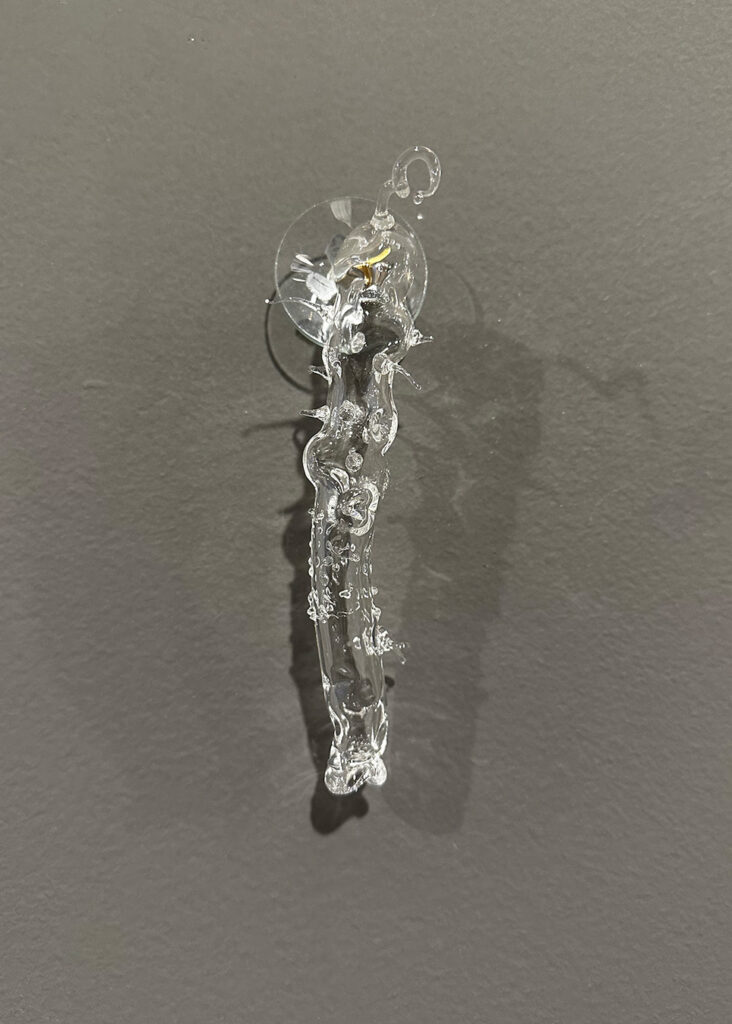
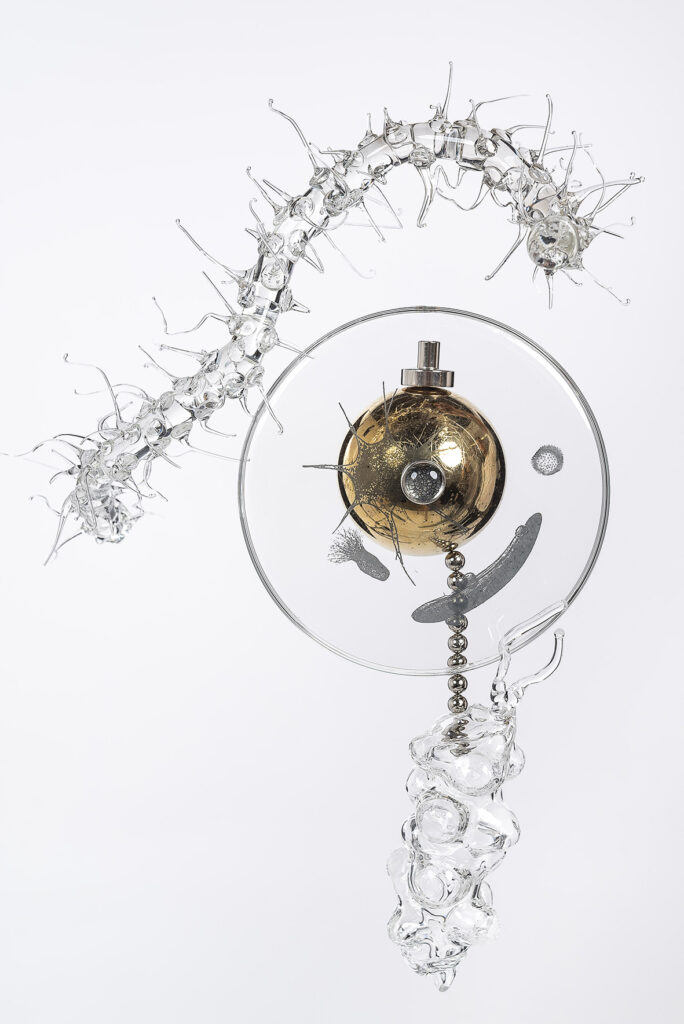
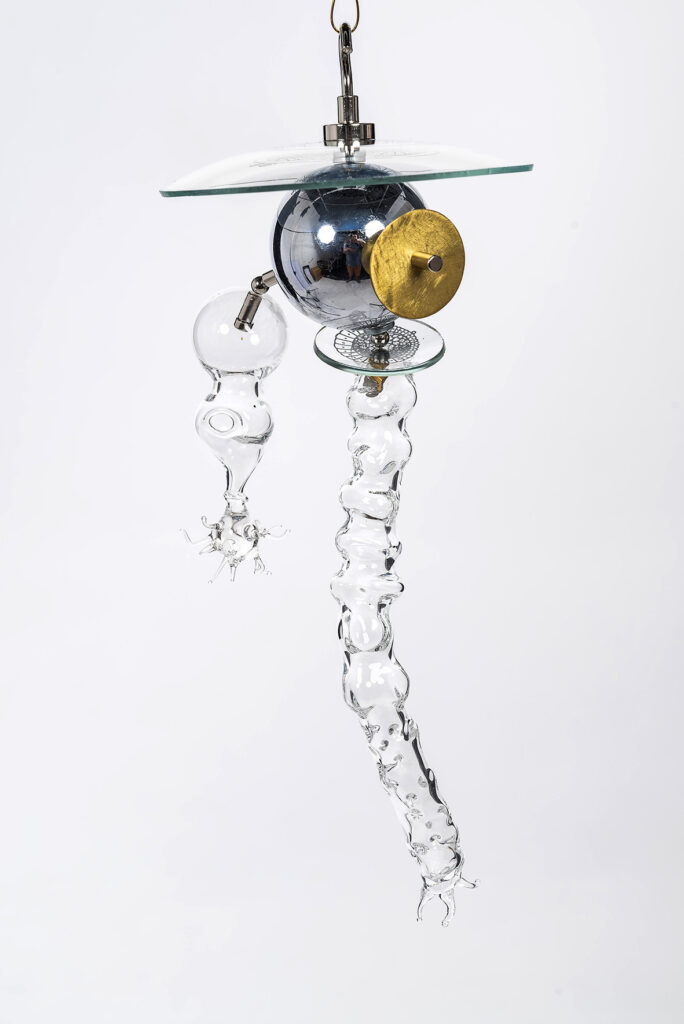
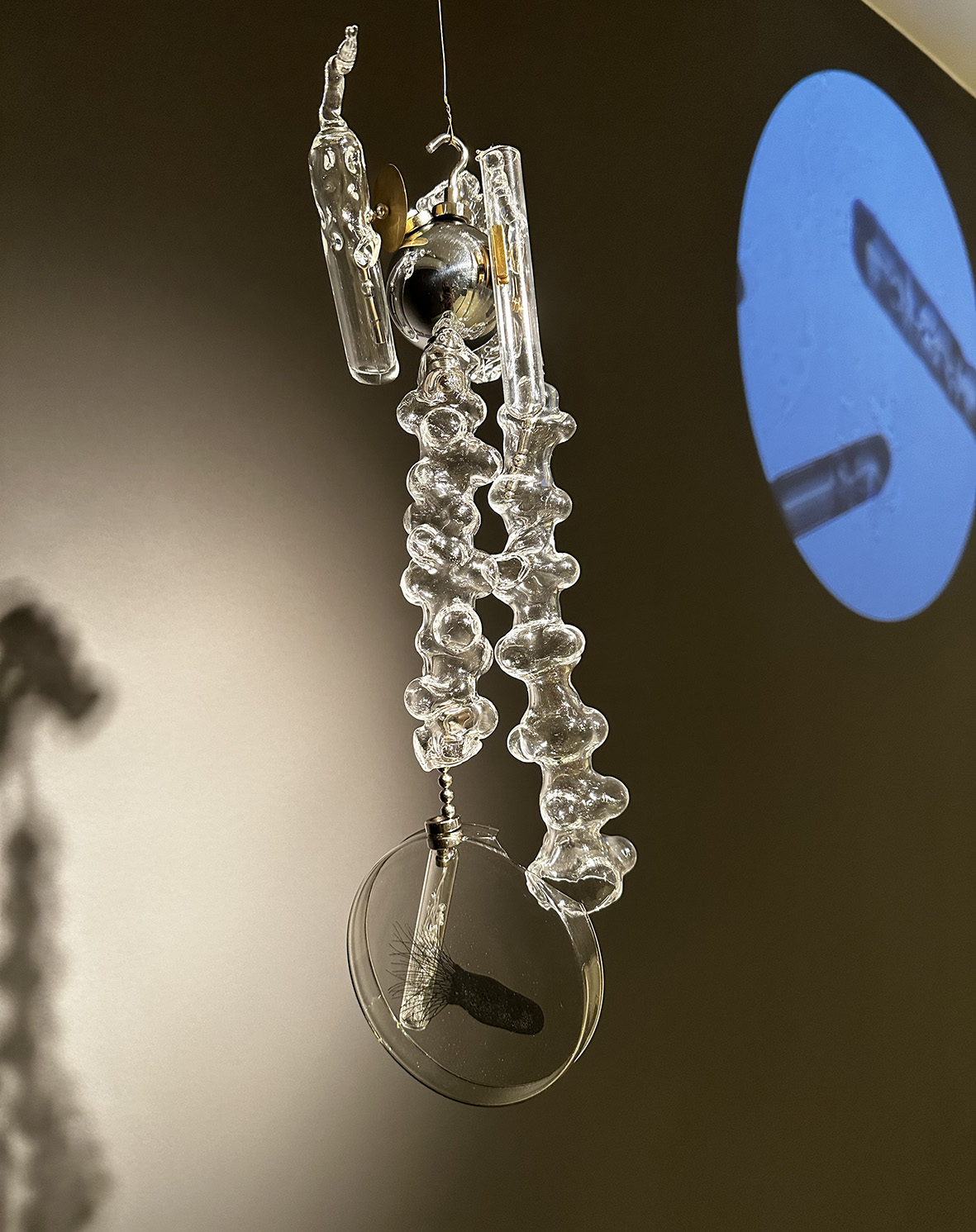
The three ACTSwhich become four, based on the artist's performance, at the opening of the exhibition, (and which remains established throughout the exhibition), are her newest research. The works are composed of an intricate association of petri dishes + brass plates and wires + irregular glass shapes, with a structure similar to that of spines, both created from heated and beautifully deformed cylinders/pipettes. This is all supported by magnets and wires, unstable, potentially changeable, moving because they are loose in space and completed by the shadow drawings that they project on the wall... ghostly.

Next to the space intended for performance, there is a void only filled by the projection of a circular video (how can we not associate it with the experience of super amplified microscopic research?). In this void and in the shadows, it is almost a moon. But a moon like that of Bertold Brecht that appears in the cathartic absorption of the scene as an instance of reality… There where we are.

Three engravings complete the exhibition. Three two-dimensional representations of the shadow of ACTS.

After all, isn’t light and shadow what constitutes this exhibition?

Marilia Panitz, curator

&copy Fuzja Studio - 2017
 

"Hand of Mysteries"

"Hand of Mysteries"


"Hand of Mysteries"

The alchemical symbol of apotheosis, the transformation of human being into god.

Alchemy is a mystical practice that flourished during the Middle Ages, bringing together science, art and magic.

One of his main goals was to obtain the elixir of life in order to ensure immortality and cure the body's diseases.

The mirror represents silver, being, the reflected self. Gold is associated with the sun, spiritual, physical and mental perfection.
The crown of Christ surrounds and protects the belief that is governed by the lunar (r)evolution.


Technique: Mirror sandblasted using the stencil technique, artist's hand in molded glass, eye in borosilicate glass molded in a blowtorch.

&copy Fuzja Studio - 2017
 

Heart Beat

Heart Beat


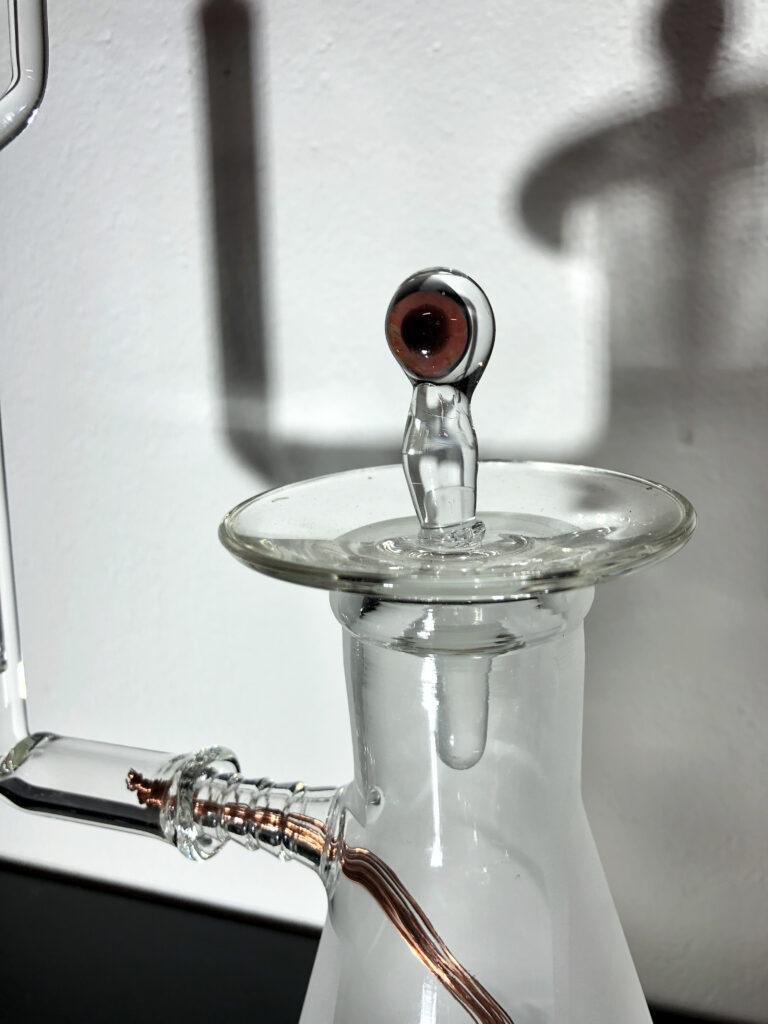
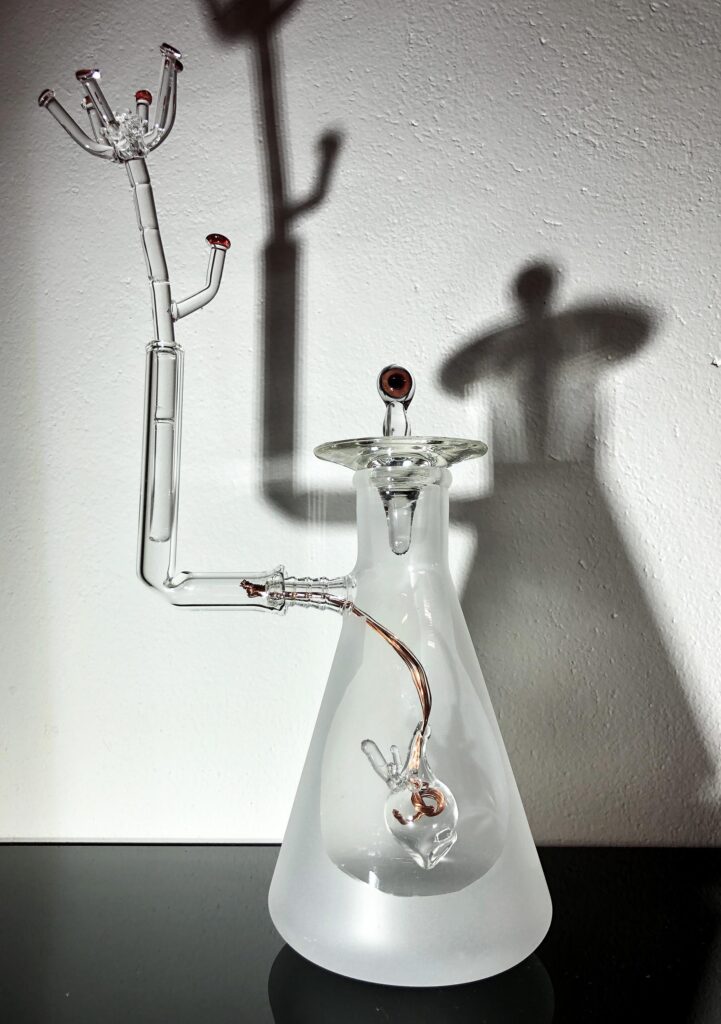
"Heart Beat", refers to the body as an experiment

transmuted,

represented by the laboratory container,

exalting the translucent heart that beats.

Its arteries and veins, the copper wires, form two knots,

one at its center and one at the end of the arm extension,

that offers a flower in a hope act. 

The head/eye observes and filters. 

Enters and leaves in an act of covering and uncovering the consciousness.


Moulded and sandblasted lab glass,

lampwork and copper wire. 2022.

&copy Fuzja Studio - 2017
 

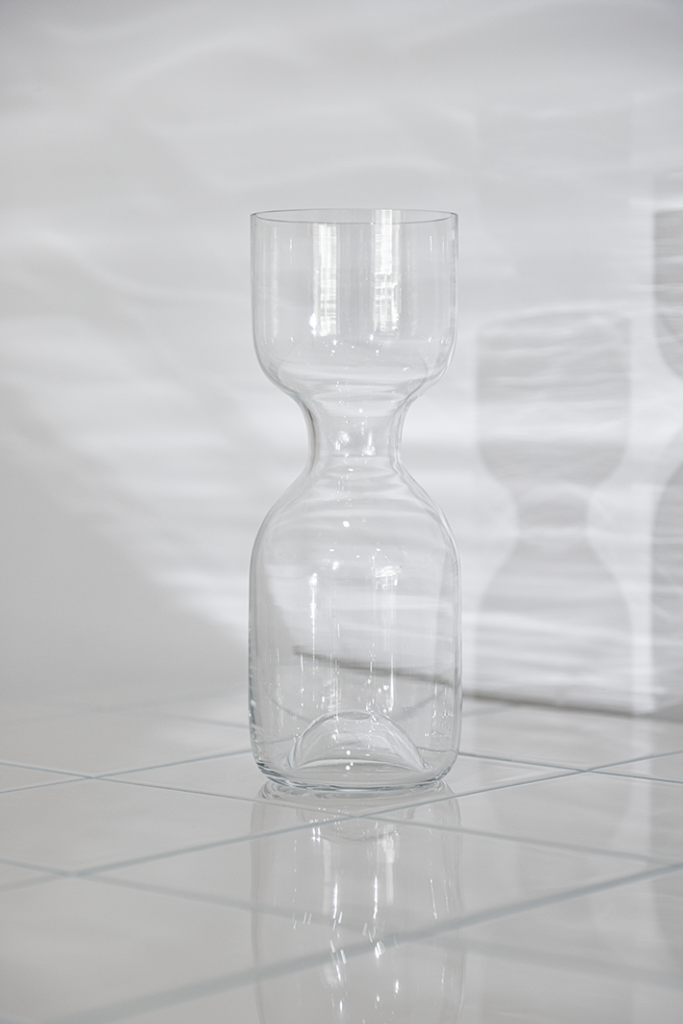
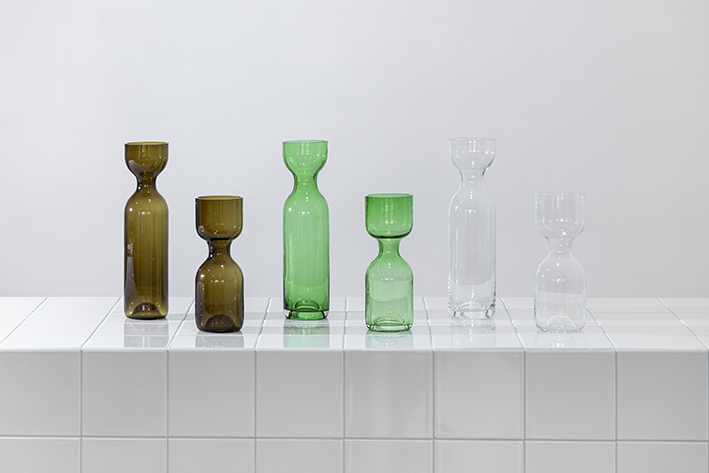
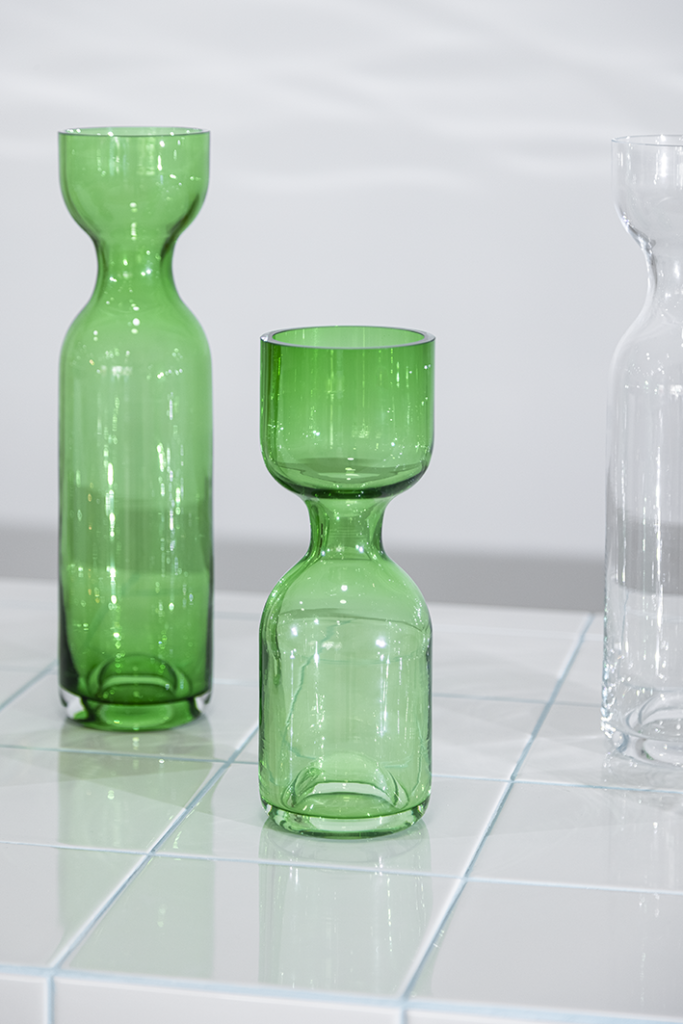
Gargalos II

Gargalos II


Gargalos II was designed together with Brunno Jahara and produced by Vicara Design, Portugal.

The design is a new version of Gargalos, made from reassembled parts of the bottle, having the neck as a starting point, mixing forms and colors.

The new design is hand blown into wood moulds.


Available for shopping in the website

https://vicara.pt/products/gargalos

&copy Fuzja Studio - 2017
 

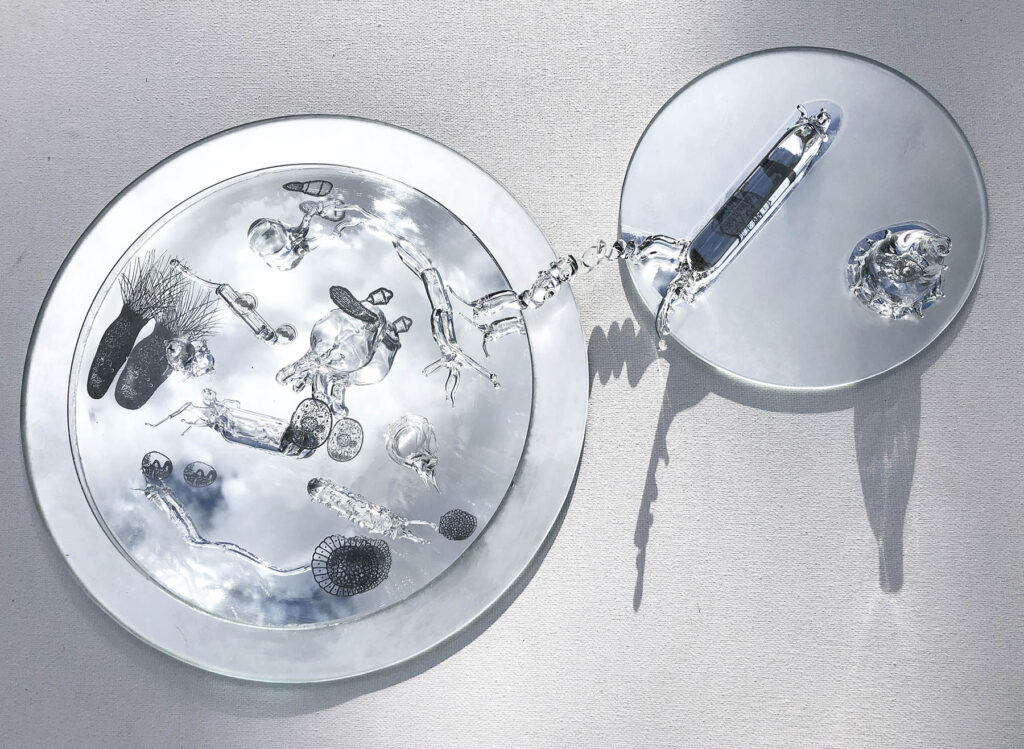
Petri II

Petri II

                        Petri is a a glass dish used in laboratories for the culture and identification of microorganisms.

                                   Amplified, here we can identify imaginary bacterias, viruses, parasites and fungos,

                                                                  microorganisms that emerged from the primordial soup.

                            Primordial soup refers to the theory that a mixture of organic compounds and microorganisms,   

                      that together with the thunderstorms and a gas mixture of methane, hydrogen and ammonia,                               

                                                                       may have given rise to life on earth.
 

                                  The reflexion of the spectator in the mirror, blends with the work itself, making us reflect about                             

                  our own origin. Somehow, we carry this moment of creation in our DNA and subconscious.
                                                                                     

                                                                                           Wall diptych object

                                    Moulded and blown borosilicate glass on sandblasted mirror, decal and watch glass.

                                                                                                    Ano 2022

&copy Fuzja Studio - 2017
 

Pendullum

Pendullum


Refers to everyday life in
 
Covid-19 times,
 
with ramifications of fact versus imaginary,
 
conscious and unconscious,
 
in a static pendular mode
 
by the tear drop.


Flameworked and blown borosilicate glass.
&copy Fuzja Studio - 2017
 

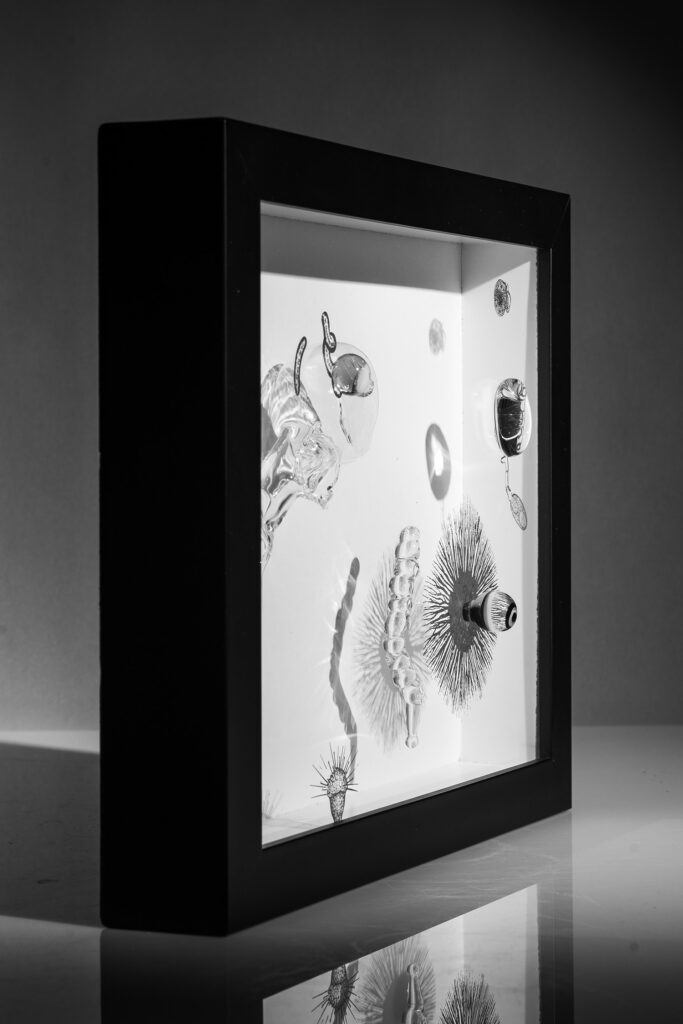
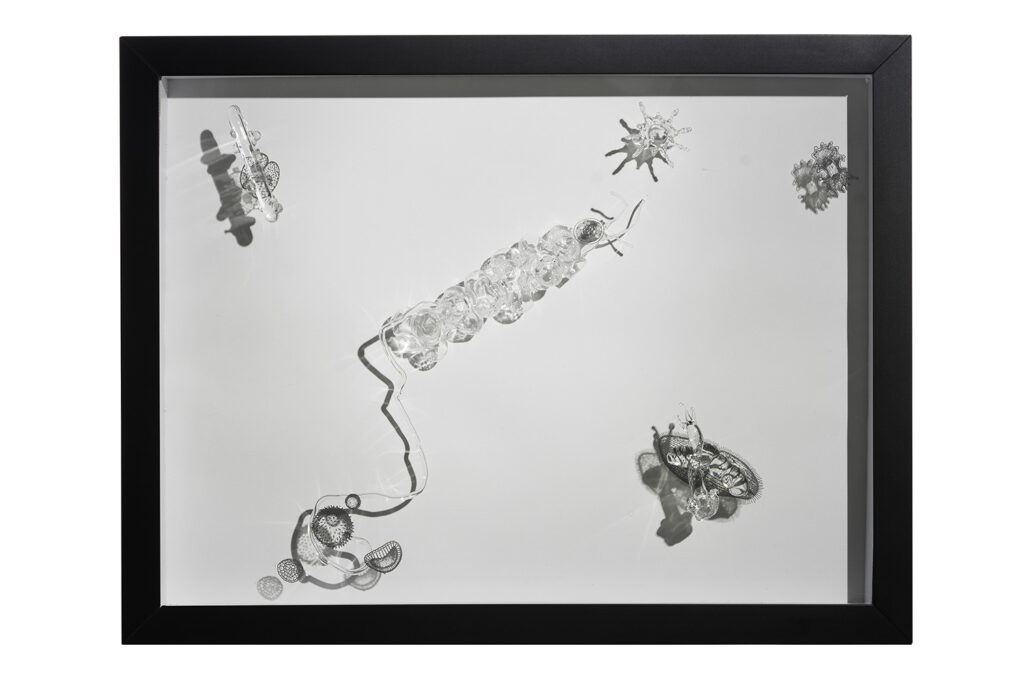
Primordial Soup III

Primordial Soup III

                                                “Primordial III Soup” refers to the theory that a mixture of organic compounds

                                                   and microorganisms, may have given rise to life on earth. Somehow,

                                                   we carry this moment of creation in our DNA and subconscious.

                                                   The work interacts with the viewer through its multiple shadows produced

                                                   by the movement of the projected light and through its lenses that magnify the forms.


                                                        Molded and blown borosilicate glass, vitreous decal, copper and frame.

&copy Fuzja Studio - 2017
 

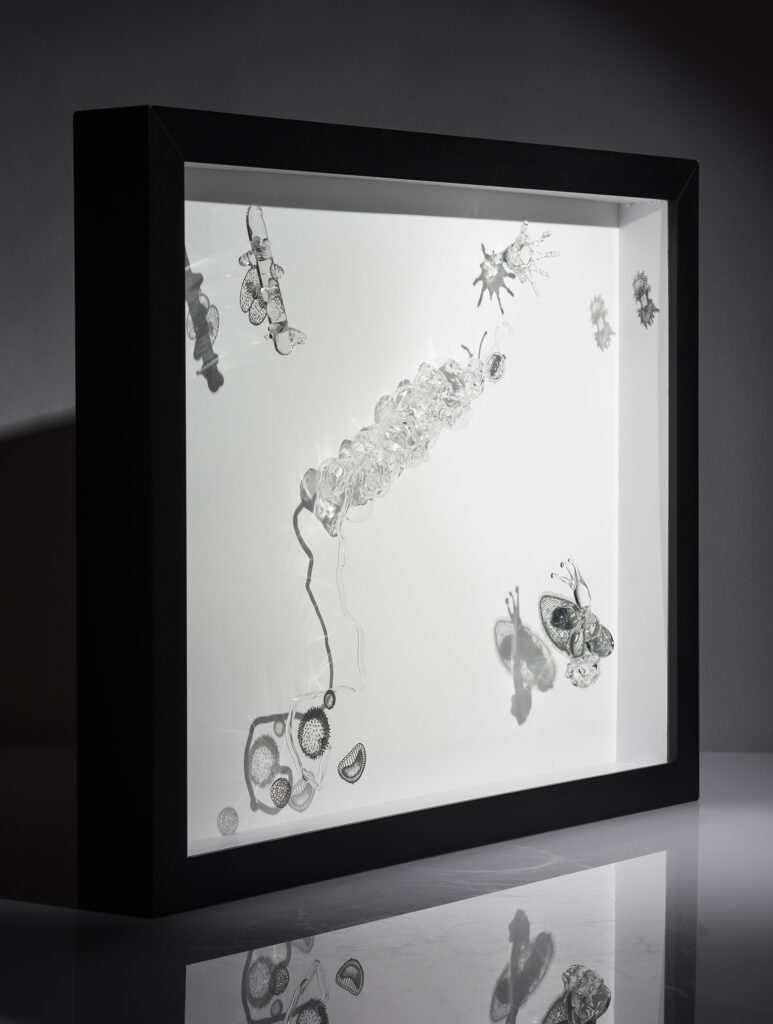
Primordial Soup II

Primordial Soup II

                                                “Primordial II Soup” refers to the theory that a mixture of organic compounds

                                                   and microorganisms, may have given rise to life on earth. Somehow,

                                                   we carry this moment of creation in our DNA and subconscious.

                                                   The work interacts with the viewer through its multiple shadows produced

                                                   by the movement of the projected light and through its lenses that magnify the forms.


                                                        Molded and blown borosilicate glass, vitreous decal, copper and frame.

&copy Fuzja Studio - 2017
 

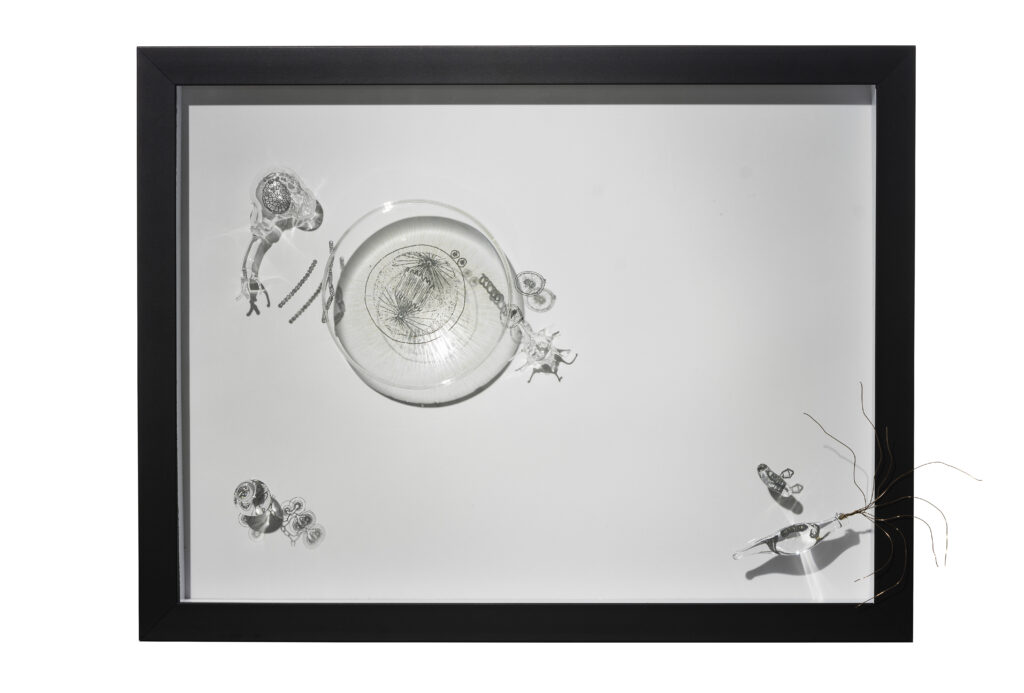
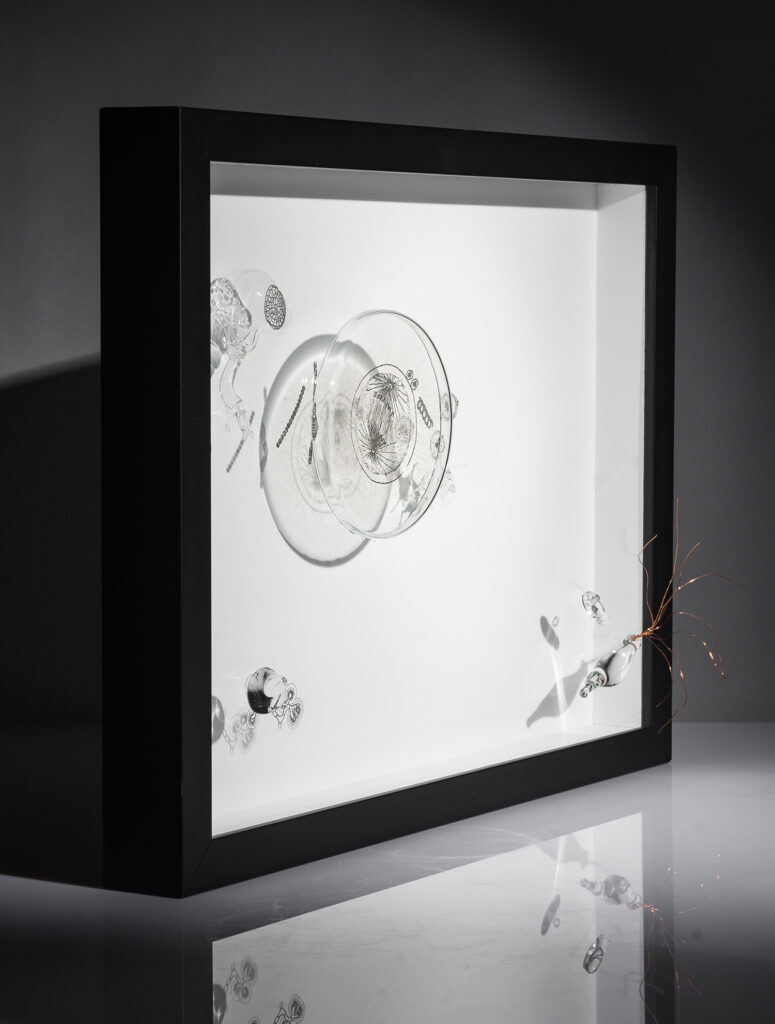
Primordial Soup I

Primordial Soup I

                                                  “Primordial I Soup” refers to the theory that a mixture of organic compounds

                                                   and microorganisms, may have given rise to life on earth. Somehow,

                                                   we carry this moment of creation in our DNA and subconscious.

                                                   The work interacts with the viewer through its multiple shadows produced

                                                   by the movement of the projected light and through its lenses that magnify the forms.


                                                        Molded and blown borosilicate glass, vitreous decal, copper and frame.

&copy Fuzja Studio - 2017